Radial Tunnel Syndrome & PIN Compression
Overview & Anatomy
Radial tunnel syndrome describes compression of the posterior interosseous nerve (PIN) — the deep motor branch of the radial nerve — as it passes through the radial tunnel, a fibromuscular channel in the proximal forearm. It is one of the most frequently misdiagnosed conditions in elbow surgery, as its presentation closely mimics lateral epicondylitis (tennis elbow) and the two conditions frequently coexist.
The Radial Tunnel
The radial tunnel extends from the radiocapitellar joint to the proximal edge of the supinator muscle. Five potential sites of compression exist within the tunnel:
- Fibrous bands anterior to the radiocapitellar joint
- The radial recurrent artery (leash of Henry)
- The medial border of the extensor carpi radialis brevis (ECRB)
- The arcade of Frohse: The most common compression site — a thickened fibrous proximal edge of the superficial head of the supinator muscle, present in 30% of individuals
- The distal edge of the supinator
Radial Tunnel Syndrome vs. Posterior Interosseous Nerve Palsy
Radial Tunnel Syndrome | Predominantly pain syndrome — deep aching forearm pain, no motor deficit (or minimal). The nerve is irritated but not significantly compressed. Often coexists with lateral epicondylitis. |
PIN Palsy (Compression Neuropathy) | Motor loss — inability to extend the fingers at the MCP joints and extend the wrist in ulnar deviation. No sensory deficit (PIN is purely motor). Caused by more severe compression, space-occupying lesion (ganglion, lipoma, tumour), or rheumatoid pannus. |
Distinguishing from Tennis Elbow
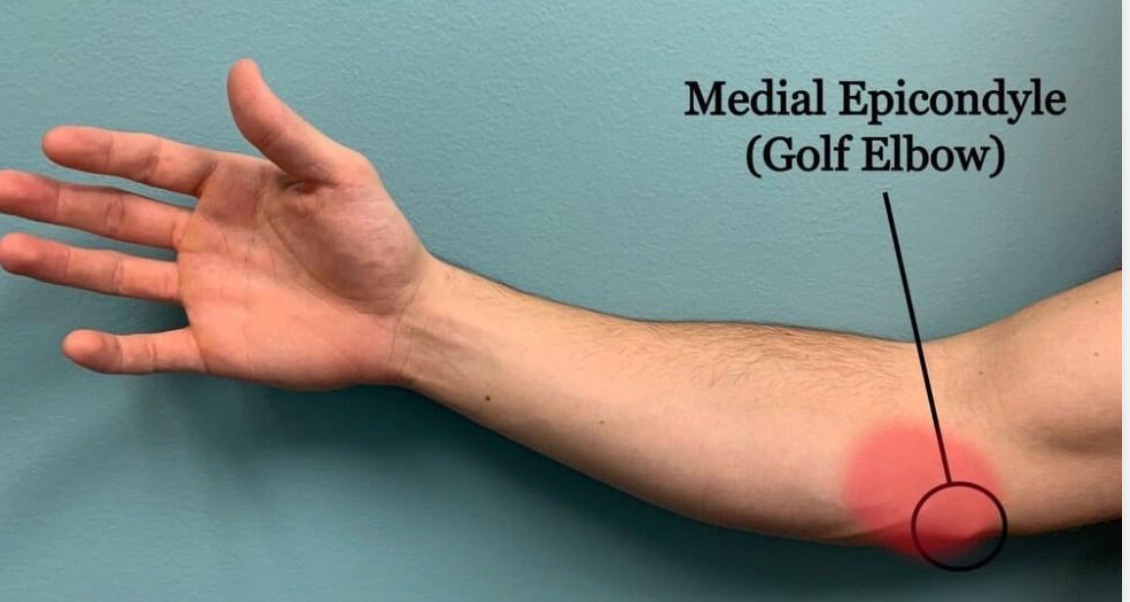
- Tenderness location: Tennis elbow tenderness is at the lateral epicondyle; radial tunnel tenderness is 4–5 cm distal, over the radial tunnel (anterior to the radial head and along the proximal extensor mass)
- Middle finger extension test (Maudsley’s): Pain at lateral epicondyle = tennis elbow; pain in forearm over radial tunnel = radial tunnel syndrome
- Neurophysiology: NCS/EMG may show PIN latency abnormality in PIN palsy; frequently normal in pure radial tunnel syndrome
- MRI: May show denervation oedema in the extensor compartment (PIN palsy); identifies space-occupying lesions
Treatment
- Conservative (radial tunnel syndrome): Activity modification, splinting with wrist in slight extension, physiotherapy, corticosteroid injection at the arcade of Frohse. A 3–6 month trial is recommended.
- Surgical decompression: Indicated for PIN palsy with motor deficit not recovering, or radial tunnel syndrome failing conservative management. The supinator is opened and the PIN decompressed through an anterior Henry or dorsal Thompson approach. Recovery of motor function after PIN palsy: 3–12 months, depending on duration of compression.
Patient FAQs –Radial Tunnel Syndrome & PIN Compression
I've been treated for tennis elbow for months with no improvement — could it be radial tunnel?
Yes, and this is a very common scenario. Radial tunnel syndrome is frequently missed or misdiagnosed as refractory tennis elbow. If your pain is maximally tender several centimetres below the lateral epicondyle (rather than directly over it) and you have deep forearm aching with forearm rotation, Dr. Senthilvelan will specifically assess for radial tunnel syndrome.