MCL Injury (Medial Collateral Ligament Sprain)
Overview
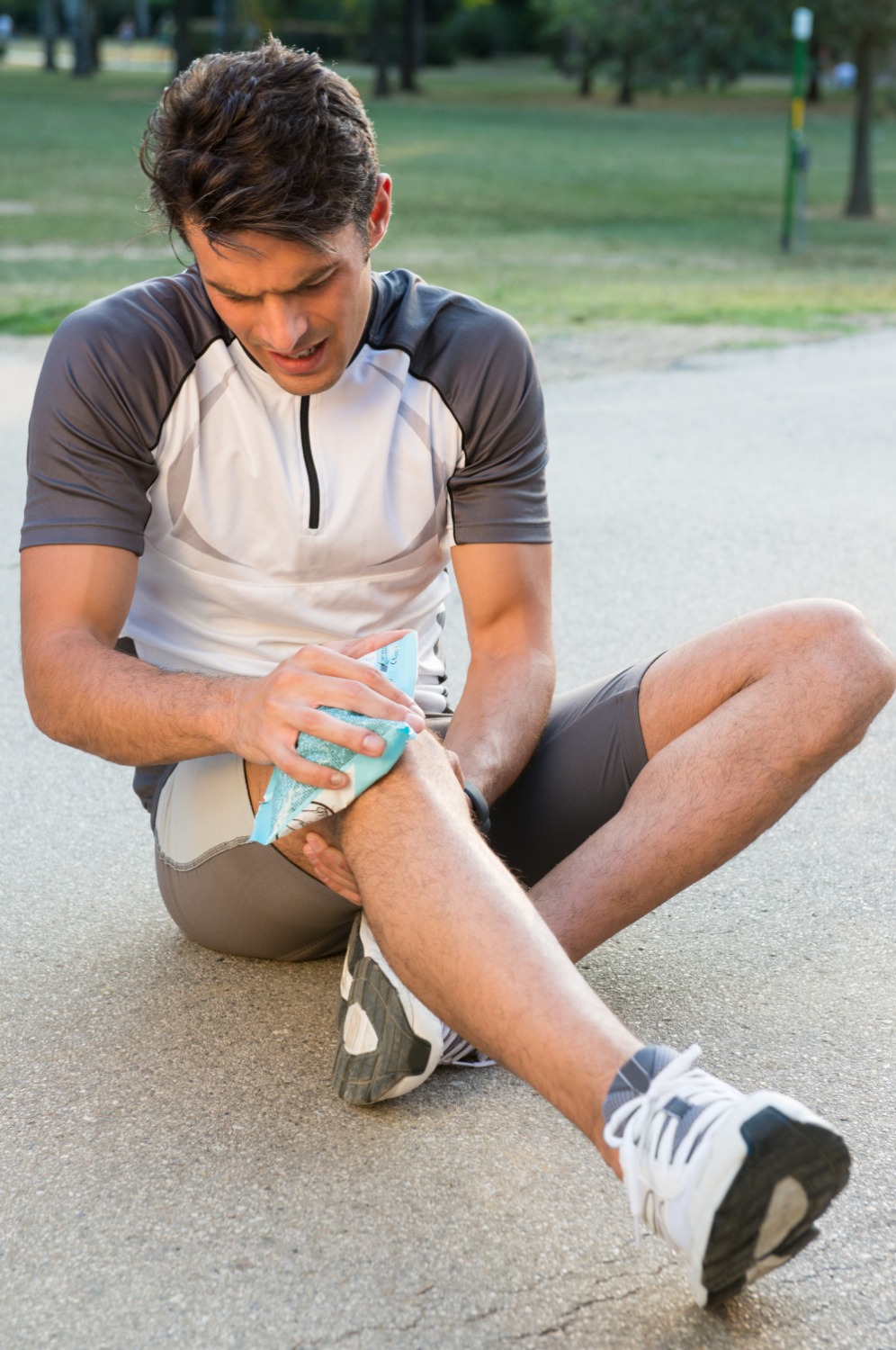
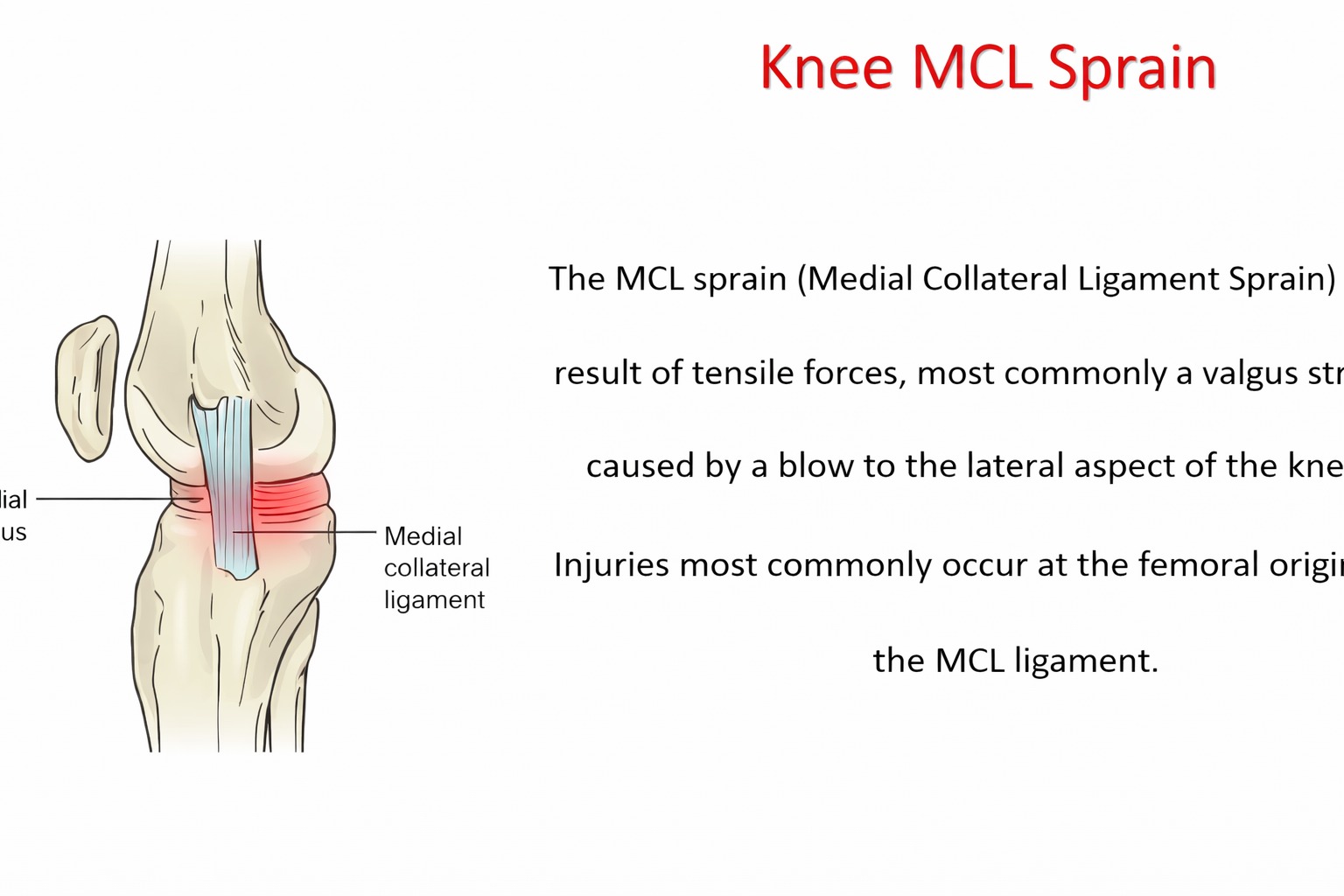
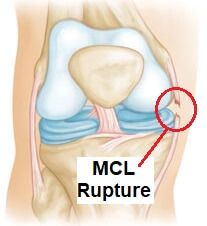
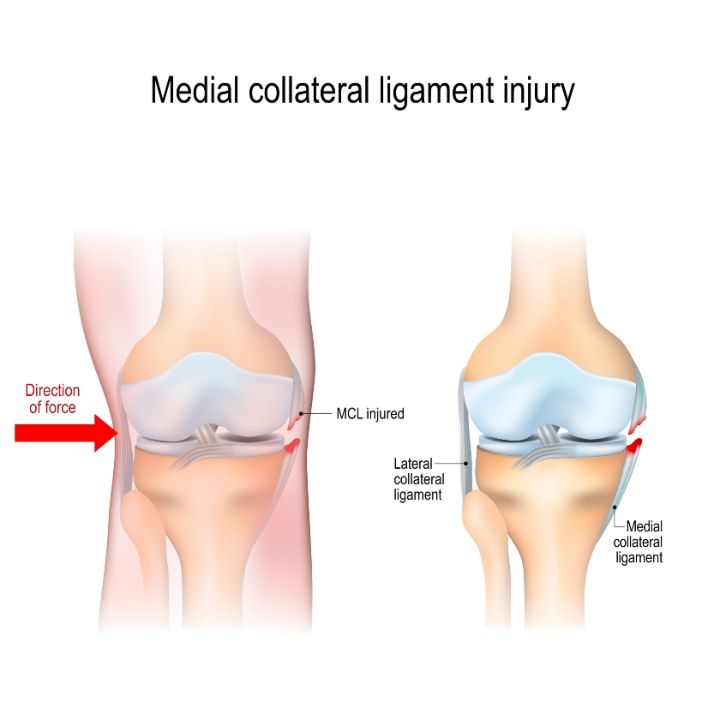
The medial collateral ligament (MCL) is a broad band of ligamentous tissue on the inner side of the knee that resists valgus (outward bending) stress and contributes to rotational stability. MCL injuries are the most common ligamentous knee injury, typically resulting from a direct blow to the outer side of the knee or from a valgus stress mechanism during sport. Injuries are graded from mild sprains (grade I) to complete tears with instability (grade III), and the MCL has an excellent capacity for healing — unlike the ACL.
Causes & Risk Factors
- Direct blow to the lateral (outer) aspect of the knee pushing it inward — common in contact sports
- Valgus stress during twisting or landing — particularly in skiing and football
- Concurrent with ACL tears in the classic ‘unhappy triad’ of ACL, MCL, and medial meniscus
- Repetitive valgus loading in athletes with pre-existing malalignment
Signs & Symptoms
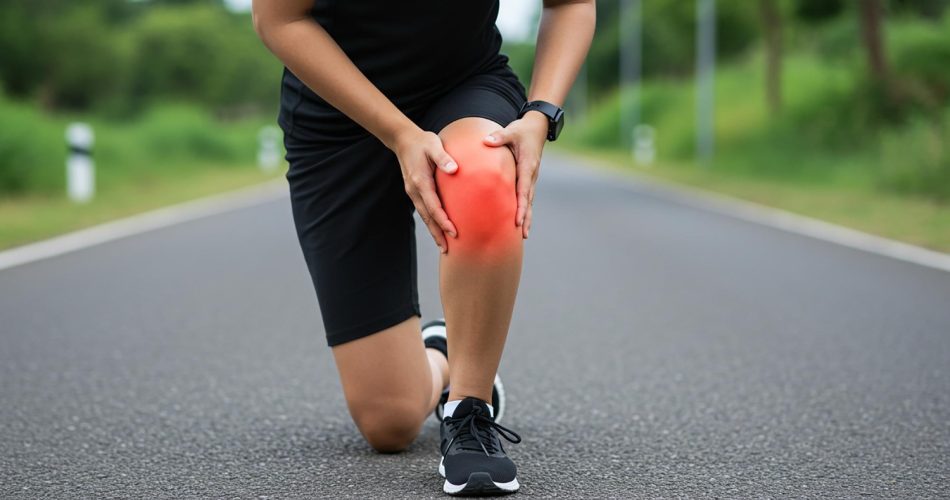
- Pain and tenderness along the inner side of the knee
- Swelling over the medial knee — may be localised rather than global
- Feeling of instability or pain when the knee is stressed inward (valgus testing)
- Bruising along the medial knee and calf in severe injuries
- In grade III tears, a palpable gap or step may be detected at the ligament
Diagnosis
Valgus stress testing at 0° and 30° of knee flexion assesses the degree of medial instability. MRI confirms the grade of injury, identifies the site of tear (femoral, mid-substance, or tibial), and detects concurrent injuries.
Treatment Options
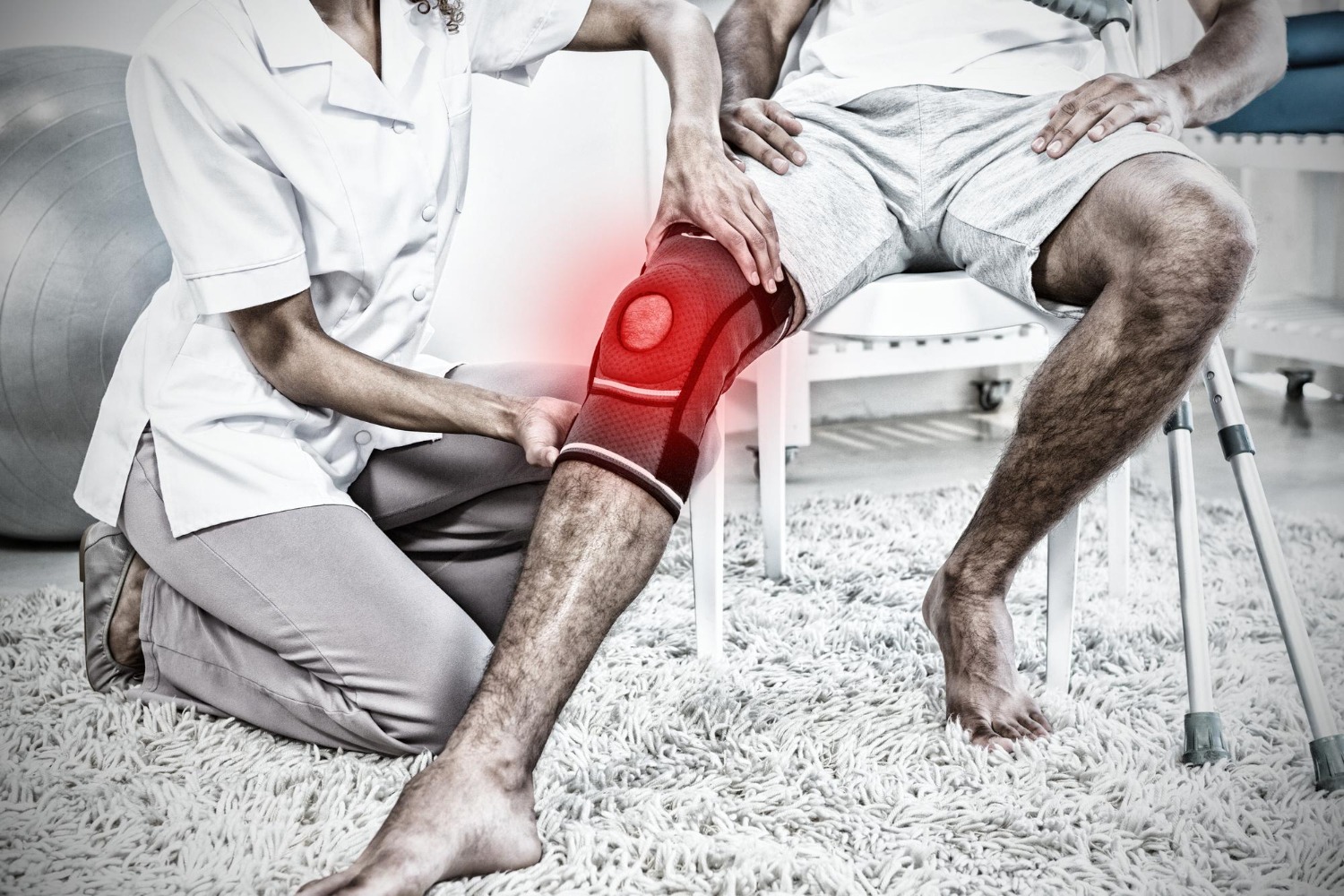
- Grade I and II: Functional rehabilitation with physiotherapy, hinged knee brace, and progressive return to sport — typically within 2–6 weeks
- Grade III isolated: Hinged bracing in slight flexion and structured physiotherapy — most isolated grade III MCL tears heal without surgery
- Surgical repair or reconstruction: Reserved for grade III injuries with persistent instability, bony avulsion injuries, or combined ligament injuries (ACL + MCL)
- Addressing concurrent injuries (ACL reconstruction) as part of the overall treatment plan
Patient FAQs – MCL Injury (Medial Collateral Ligament Sprain)
Does an MCL tear need surgery?
The majority of MCL tears — including most grade III injuries — heal successfully with conservative management (bracing and physiotherapy) due to the ligament’s excellent blood supply. Surgery is reserved for select cases with persistent instability or combined ligament injuries.
How long does an MCL injury take to heal?
Grade I injuries typically resolve within 1–3 weeks. Grade II injuries take 3–6 weeks. Grade III tears may require 6–12 weeks of rehabilitation. Return to contact sport follows when clinical and functional tests confirm adequate stability.
Can I play sport with an MCL injury?
Returning to sport with an MCL injury depends on grade and sport demands. Grade I injuries may allow continued participation with appropriate strapping. Higher-grade injuries require a period of rehabilitation and bracing before return, to avoid re-injury and progressive instability.