Iliotibial Band Syndrome (IT Band Syndrome)
Overview
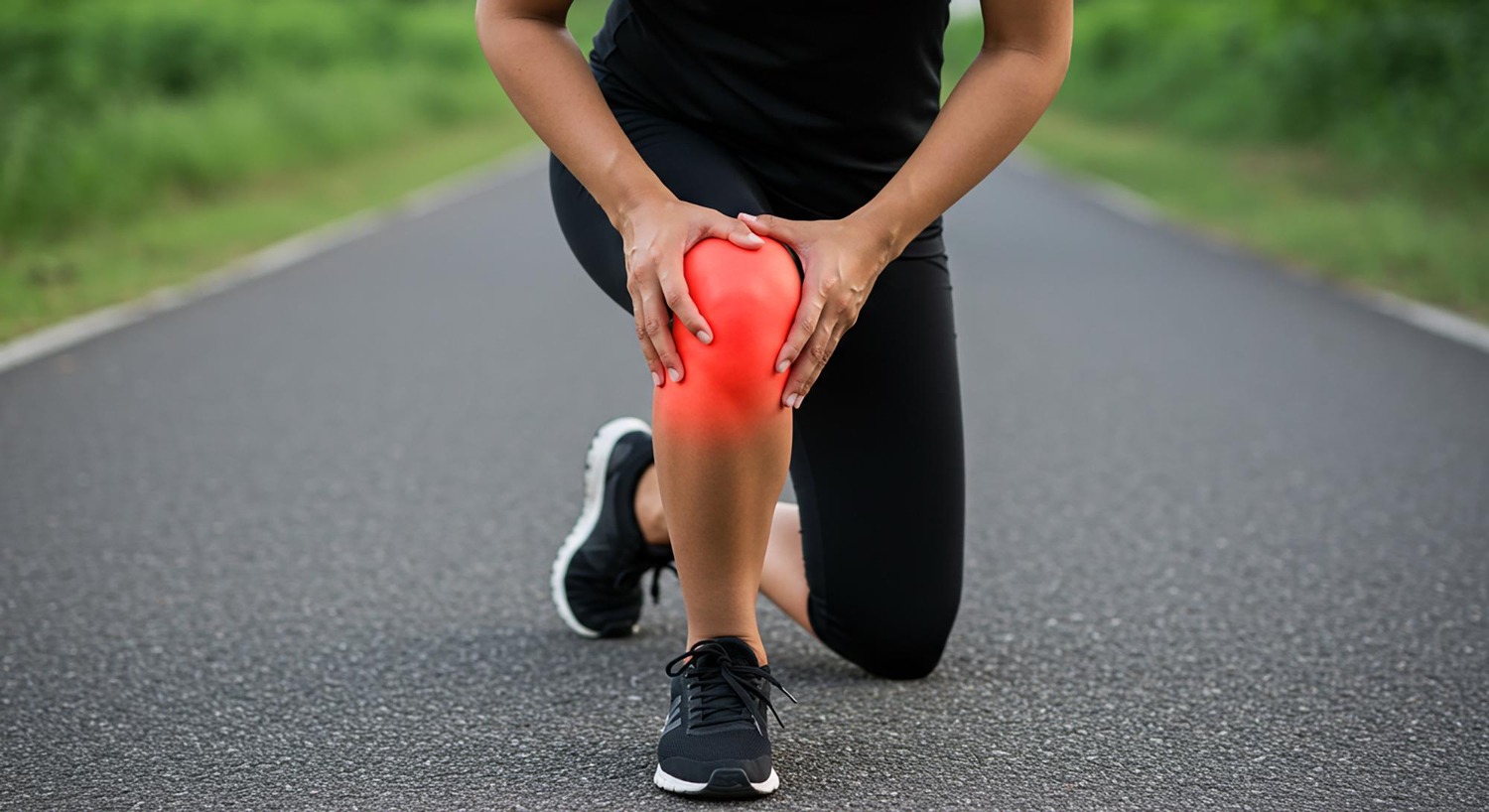
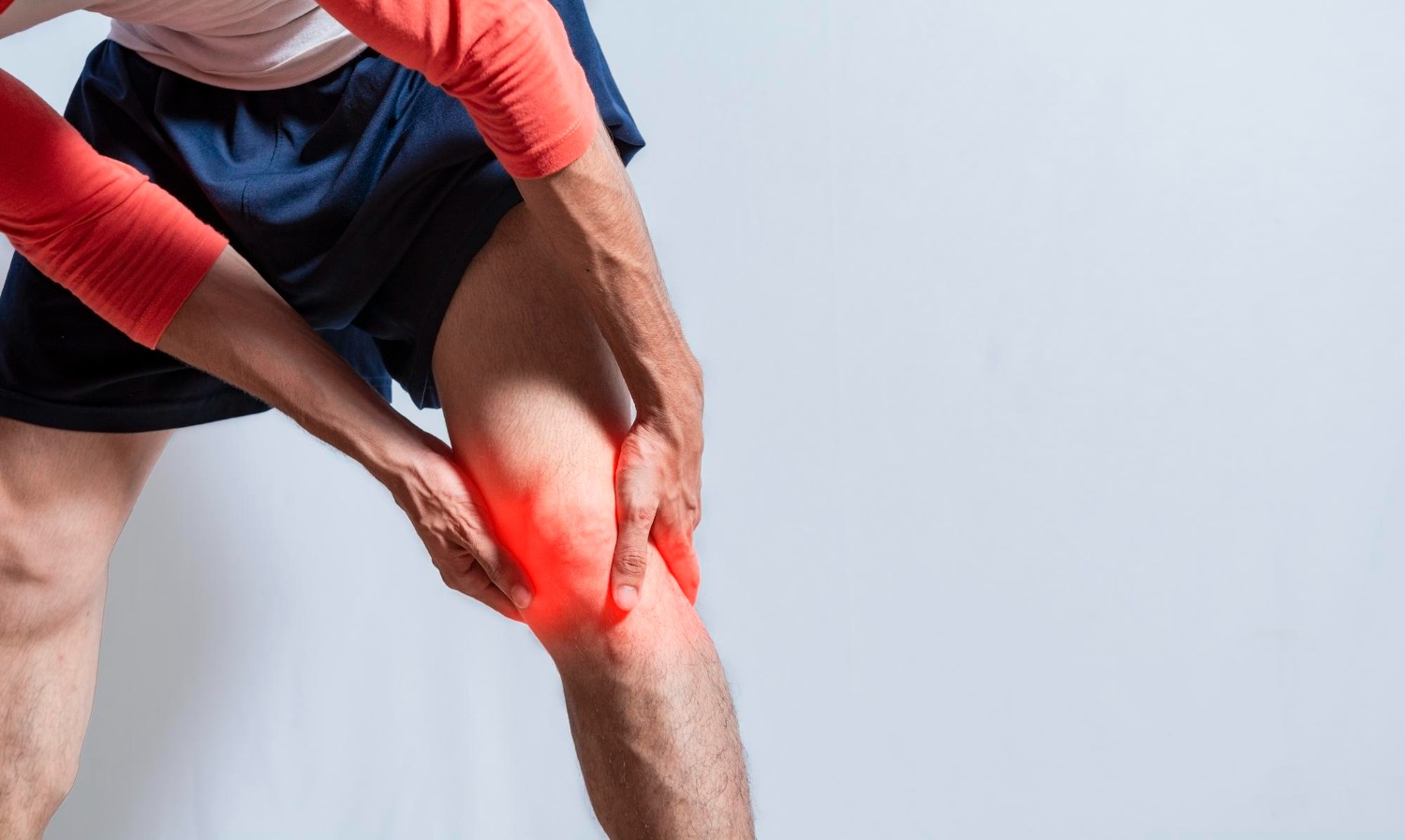
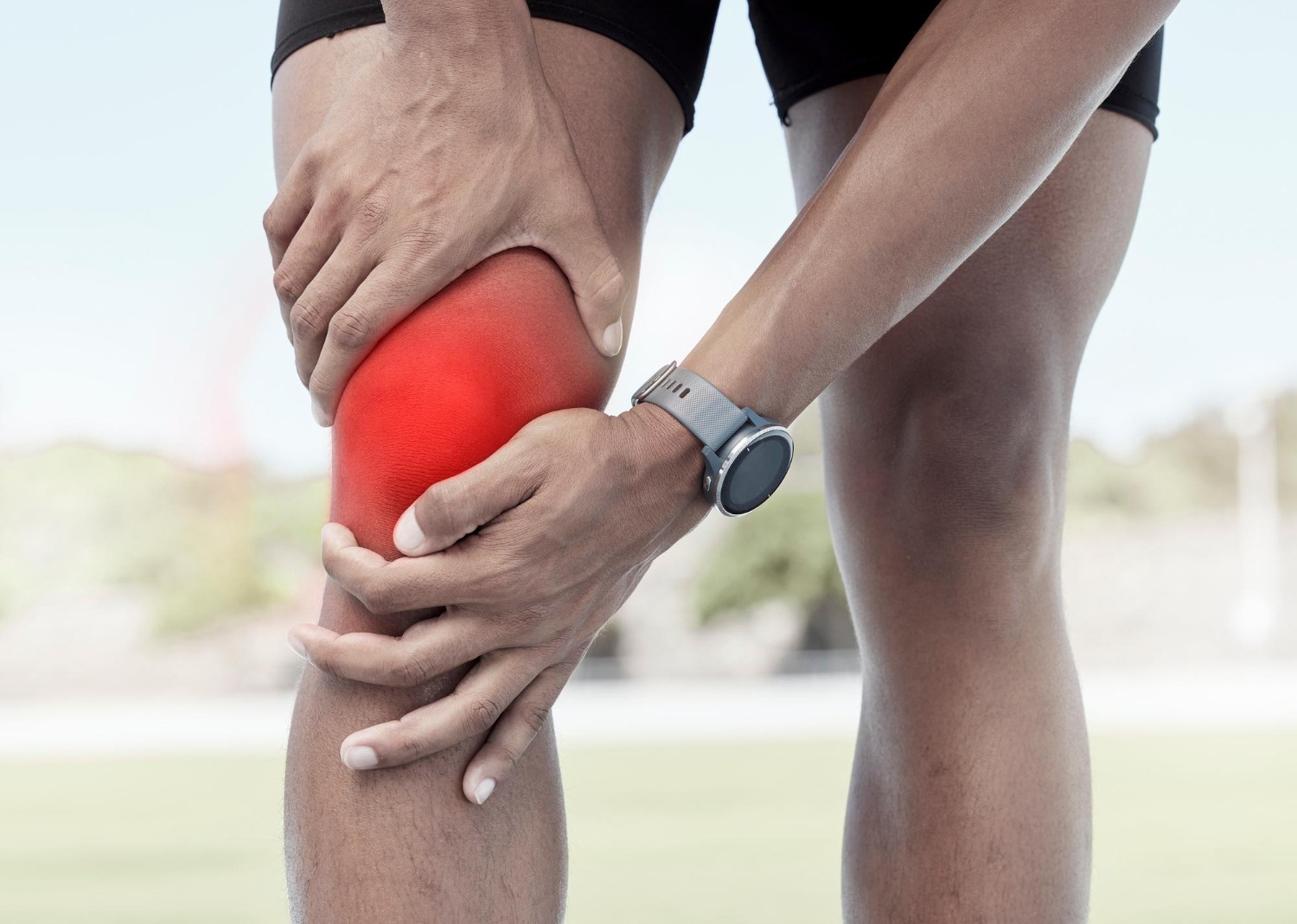
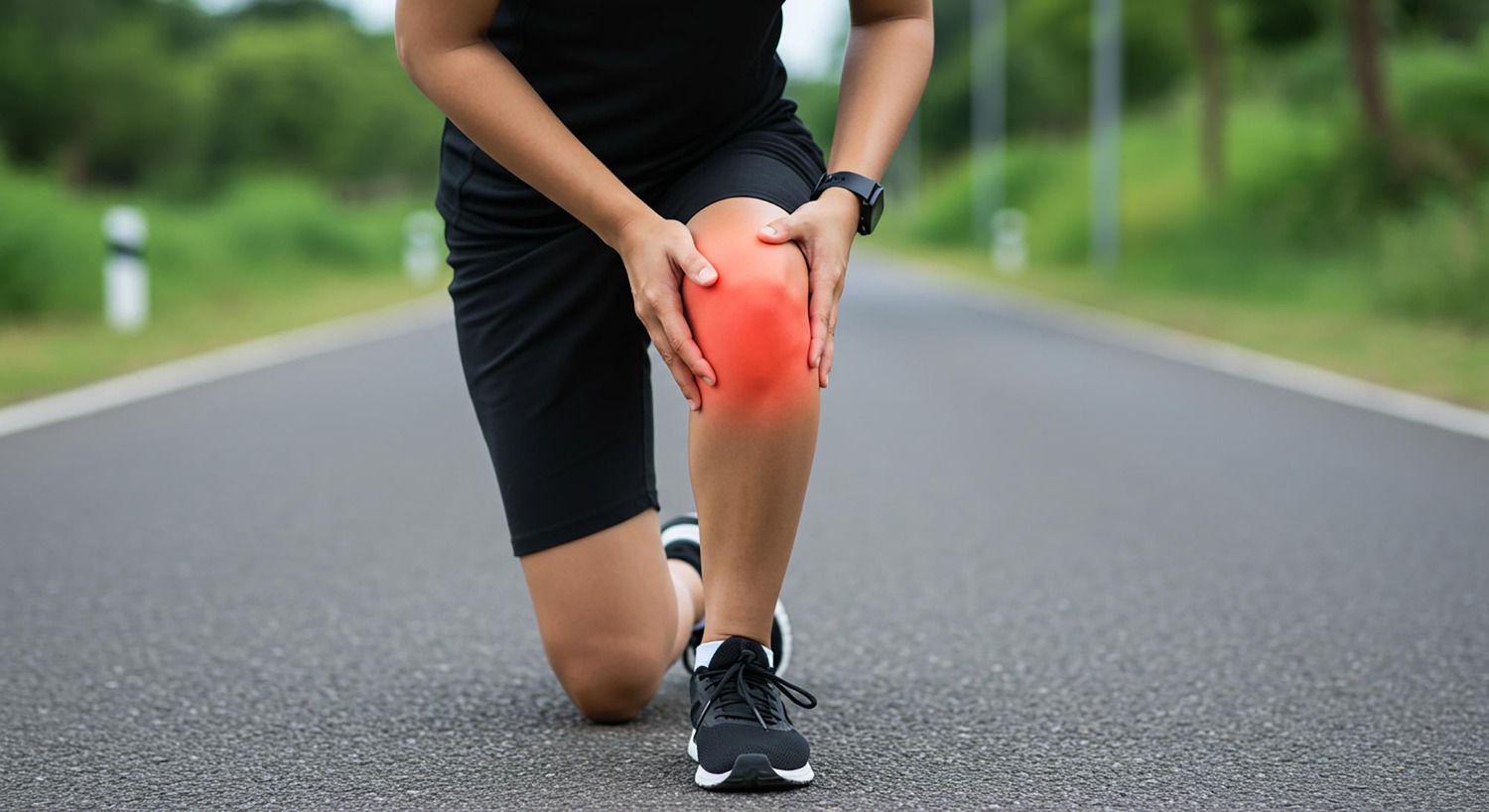
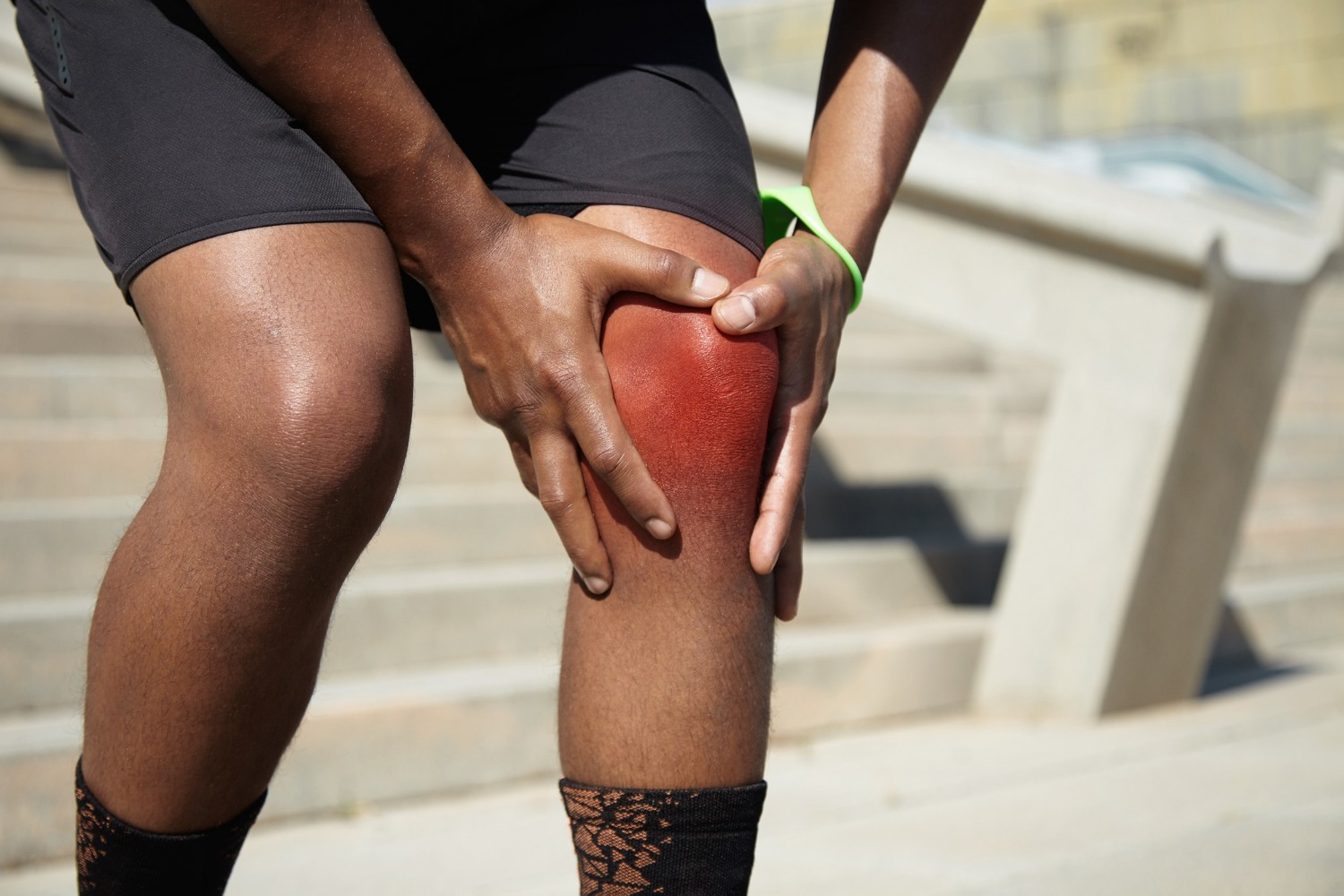
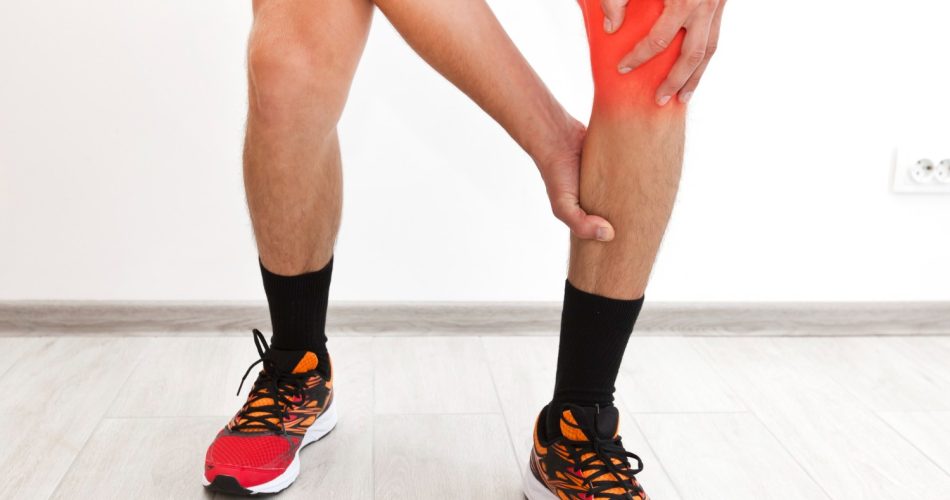
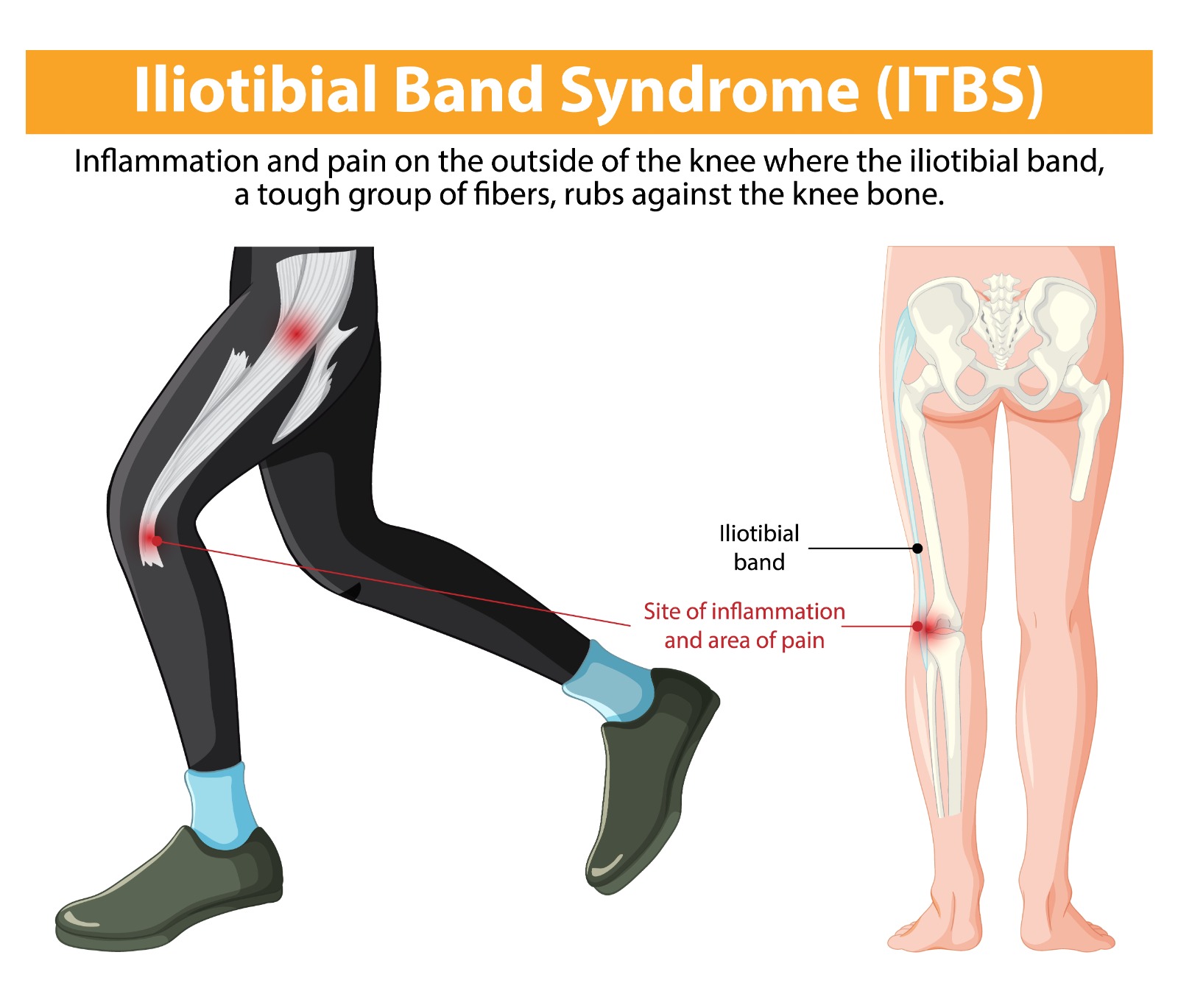
Iliotibial Band (ITB) Syndrome is an overuse injury caused by repetitive friction of the iliotibial band — a thick band of connective tissue running from the hip down the outer thigh to the lateral knee — over the lateral femoral epicondyle. It is the most common cause of lateral (outer) knee pain in runners and cyclists, and is a frequent cause of training interruption in endurance athletes. Despite its prevalence, ITB syndrome is frequently misdiagnosed or inadequately treated.
Causes & Risk Factors
- Rapid increases in running mileage — particularly long-distance training
- Downhill running, which increases ITB friction at the knee
- Hip abductor and gluteal weakness causing excessive dynamic valgus and internal hip rotation
- Running on cambered or banked surfaces
- Leg length discrepancy or foot overpronation
- Inadequate warm-up and post-exercise stretching
Signs & Symptoms
- Sharp or burning pain at the outer side of the knee, typically appearing after a consistent distance of running
- Pain that disappears with rest but predictably returns at the same point in a run
- Tenderness directly over the lateral femoral epicondyle
- Occasional snapping sensation as the ITB flicks over the epicondyle
- In chronic cases, pain present even with walking
Diagnosis
Diagnosis is clinical. Ober’s test and Noble’s compression test identify ITB tightness and reproduce lateral knee pain. MRI may demonstrate signal change in the ITB or lateral knee bursa in severe or uncertain cases.
Treatment Options
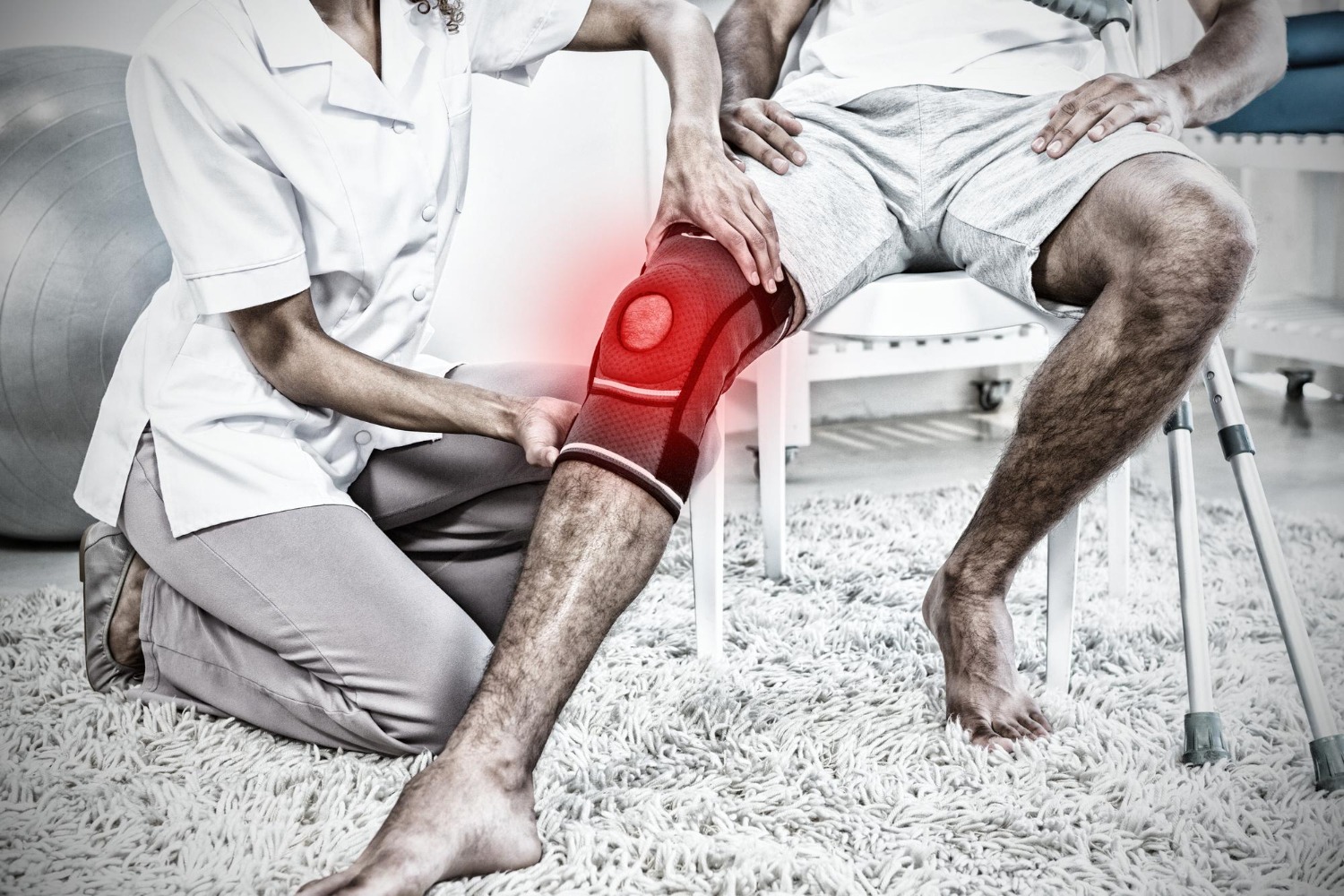
- Relative rest from running with temporary substitution of low-impact cross-training (swimming, cycling in pain-free range)
- Hip abductor and gluteal strengthening — the most important rehabilitation component
- ITB foam rolling and stretching as adjunct measures
- Running gait retraining — increasing step cadence, reducing crossover, improving trunk and hip mechanics
- Corticosteroid injection into the lateral knee bursa for acute, severely painful presentations
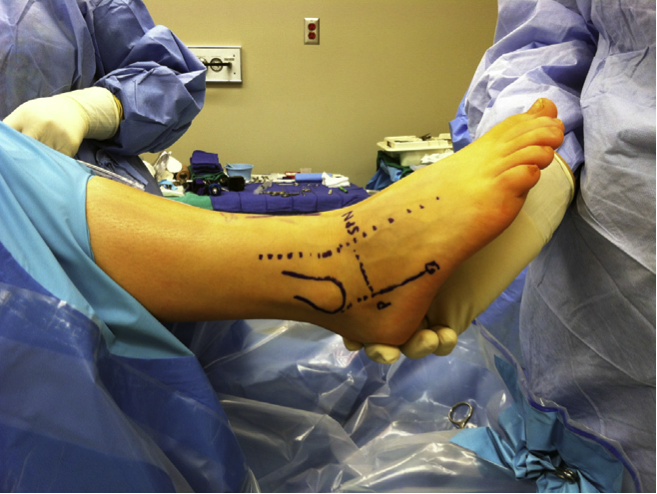
- Surgical ITB lengthening or bursectomy in rare, refractory cases
Patient FAQs – Iliotibial Band Syndrome (IT Band Syndrome)
Is IT band syndrome serious?
In isolation, ITB syndrome does not cause lasting structural damage to the knee. However, without addressing the underlying biomechanical causes, it frequently becomes chronic and recurring, significantly limiting training and competition.
Should I stop running with IT band syndrome?
Complete cessation is rarely necessary. A structured reduction in volume — avoiding the specific training patterns (long runs, downhill) that provoke symptoms — combined with targeted hip strengthening and gait retraining allows progressive return to full running.
Does stretching the IT band cure this condition?
Stretching the ITB itself produces minimal improvement, as the band is a dense, poorly extensible structure. The most effective interventions target hip abductor strength and running mechanics — addressing the root cause of excessive ITB loading.