Wrist Instability & Scapholunate Ligament Tears
Overview
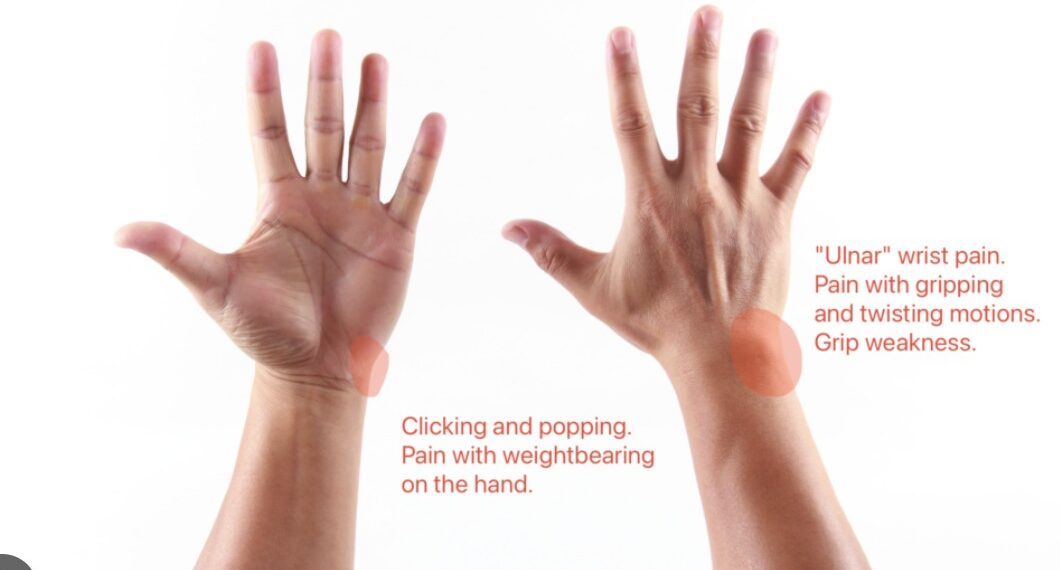
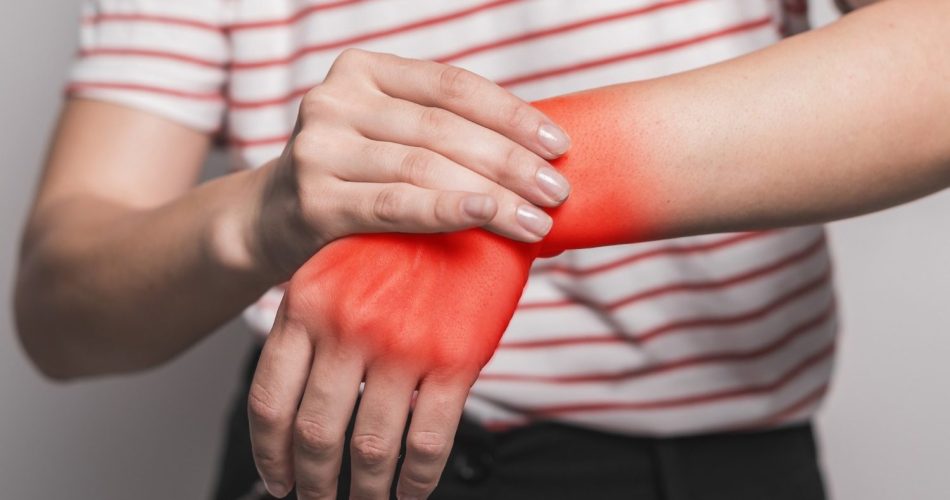
Guyon’s canal syndrome describes compression of the ulnar nerve as it passes through Guyon’s canal — a fibro-osseous tunnel at the ulnar side of the wrist, bounded by the pisiform medially, the hook of the hamate laterally, and the palmar carpal ligament as a roof. The ulnar nerve divides within the canal into a superficial sensory branch (supplying the little finger and ulnar half of the ring finger) and a deep motor branch (supplying the hypothenar muscles, interossei, and adductor pollicis). The clinical presentation depends on where within the canal compression occurs.
Causes
- Ganglion cyst arising from the pisotriquetral joint — the most common cause
- Hook of hamate fracture (non-union) — important cause in golfers and bat sports athletes; must be specifically excluded
- Repetitive compression from handlebar cycling (‘handlebar palsy’), jackhammers, or crutch use
- Vascular: Ulnar artery thrombosis or aneurysm (hypothenar hammer syndrome) — direct compression of the nerve by an abnormal vessel
- Lipoma, anomalous muscle, or other space-occupying lesion within the canal
Clinical Zones & Presentation
Zone I (proximal to bifurcation) | Mixed motor and sensory deficit — hypothenar weakness + little/ring finger numbness |
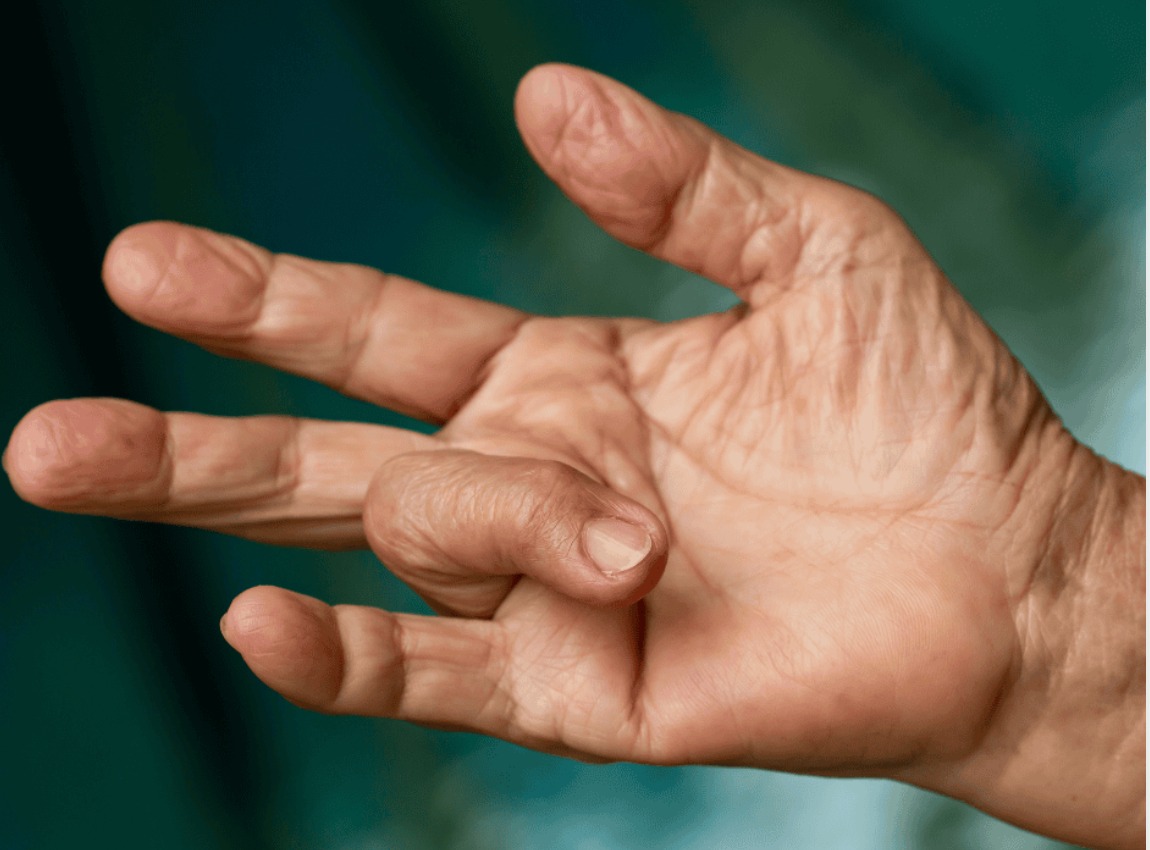
Zone II (deep motor branch only) | Pure motor deficit — intrinsic weakness without sensory loss. Claw hand without sensory symptoms. |
Zone III (superficial sensory branch) | Pure sensory deficit — little and ulnar ring finger numbness without weakness. Easily confused with cubital tunnel syndrome. |
Distinguishing from Cubital Tunnel Syndrome
Both conditions affect the ulnar nerve, but their anatomical level of compression differs. Key distinguishing features: dorsal hand sensation (supplied by the dorsal ulnar cutaneous branch, which arises proximal to Guyon’s canal) is preserved in Guyon’s syndrome but may be impaired in cubital tunnel syndrome. The hypothenar muscles and interossei are affected in both, but the flexor carpi ulnaris and flexor digitorum profundus to ring and little finger (innervated above the wrist) are spared in Guyon’s syndrome.
Treatment
- Identify and treat the underlying cause: Ganglion excision, hamate hook fragment excision, cessation of causative activity, vascular surgery for ulnar artery aneurysm
- Surgical decompression of Guyon’s canal: Release of the palmar carpal ligament and deep fascia under local anaesthesia. Combined with treatment of the causative lesion.
- Activity modification and splinting for mild cases with identifiable provocative cause
Patient FAQs –Guyon's Canal Syndrome (Ulnar Nerve at Wrist)
How is Guyon's canal syndrome different from carpal tunnel syndrome?
Both are wrist-level nerve entrapments but affect different nerves. Carpal tunnel syndrome compresses the median nerve — affecting the thumb, index, middle, and radial half of the ring finger, with thenar weakness. Guyon’s canal syndrome compresses the ulnar nerve — affecting the little finger, ulnar half of the ring finger, and the intrinsic hand muscles (interossei and hypothenar group). Dr. Senthilvelan will perform nerve conduction studies and clinical assessment to distinguish the two.
I cycle long distances and have developed hand weakness — could this be Guyon's syndrome?
Very likely. Handlebar palsy from sustained compression of the ulnar nerve at Guyon’s canal during cycling is a well-recognised condition. It is most common in road cyclists using dropped handlebars. Padded gloves, changing hand position frequently, and adjusting handlebar height and position are the first-line interventions. Most cases resolve within weeks to months of offloading. Persistent weakness requires assessment by Dr. Senthilvelan.