Biceps Tendon Tear at the Shoulder
Treatment by Dr. Senthilvelan – Shoulder, Elbow & Wrist Specialist
Overview
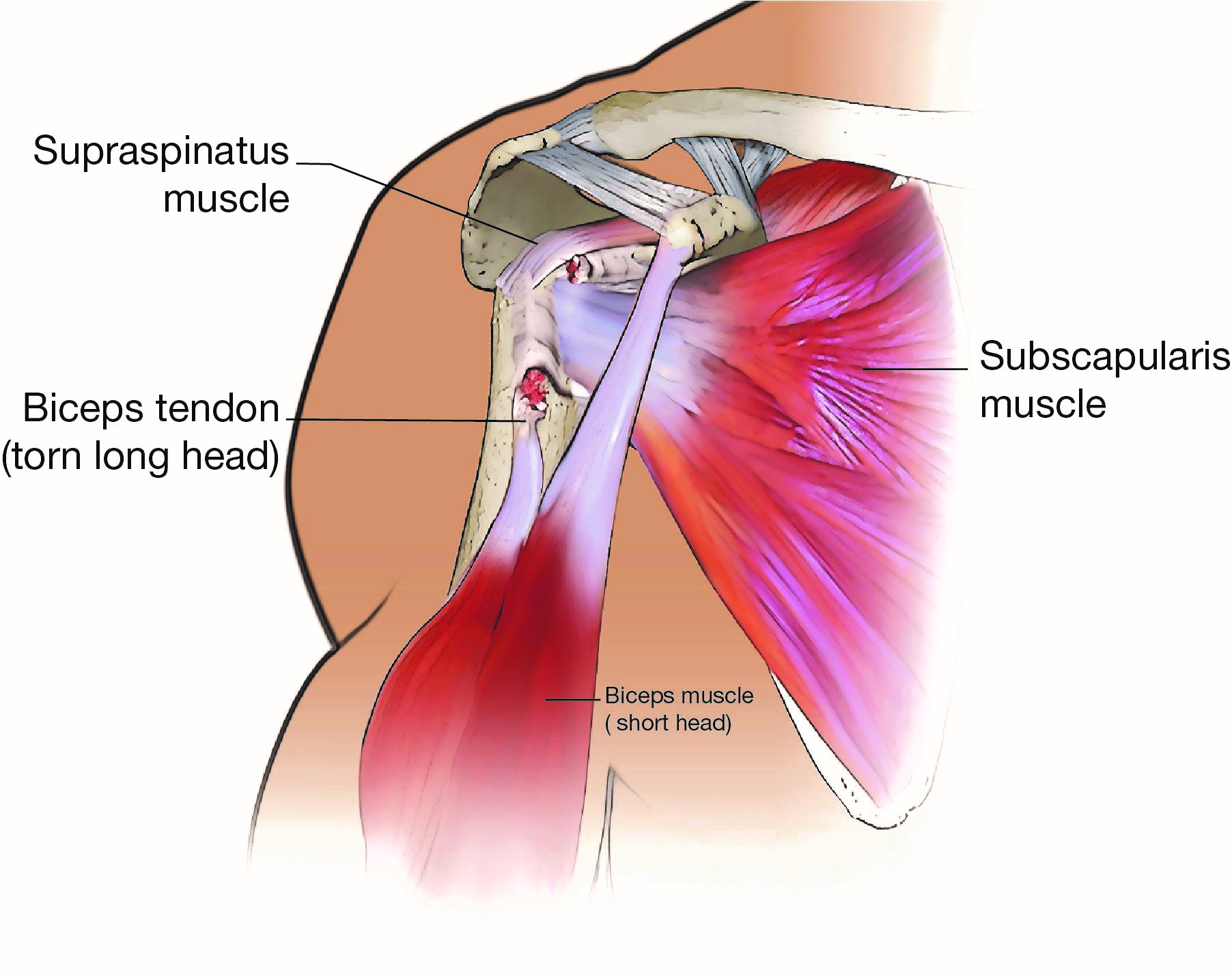
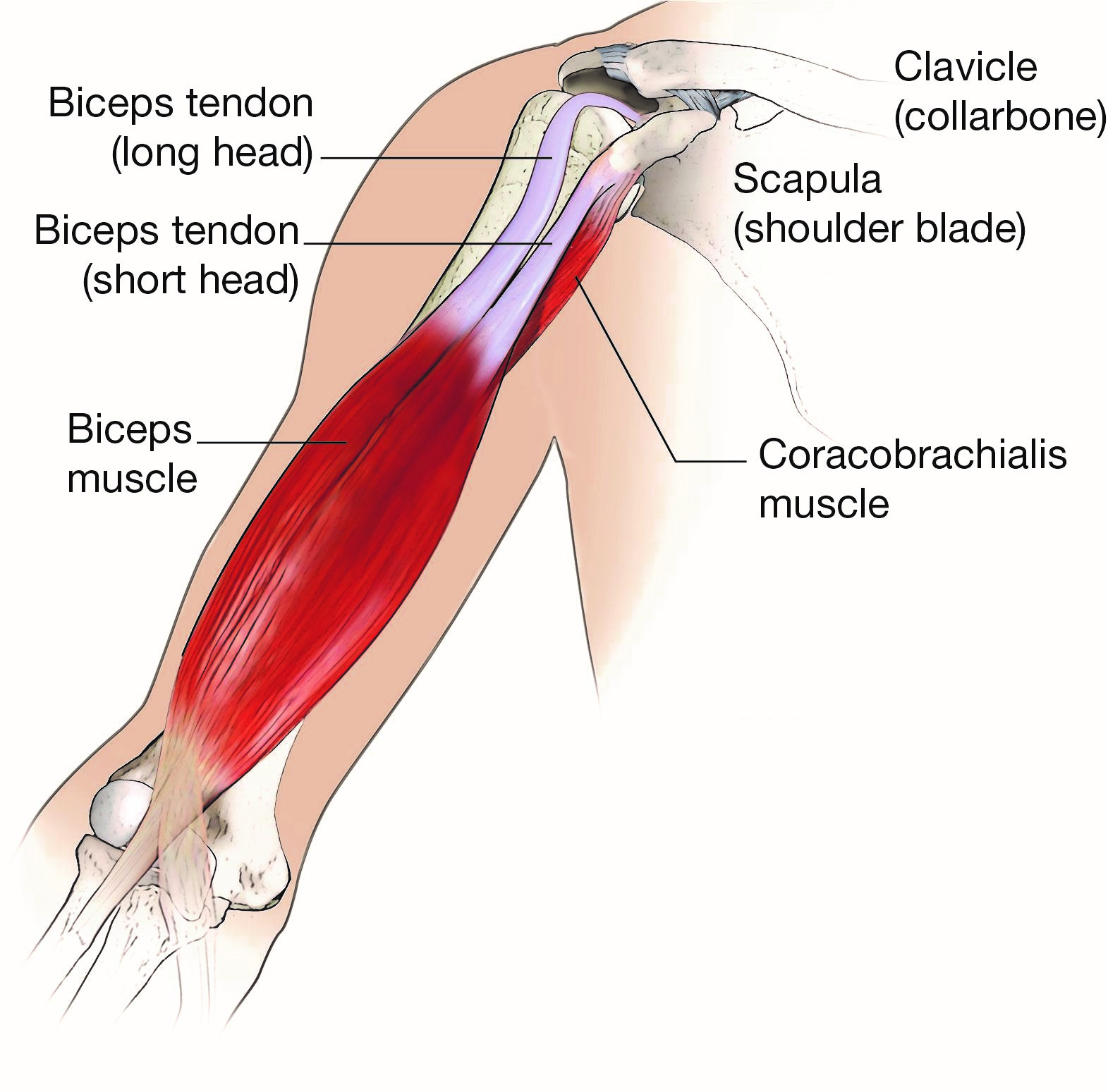
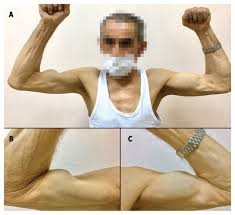
A biceps tendon tear at the shoulder occurs when the tendon connecting the biceps muscle to the shoulder joint becomes damaged or ruptures. The biceps has two attachments at the shoulder, and most tears involve the long head of the tendon.
Because the second attachment usually remains intact, many patients retain good arm function even after a tear. However, some patients may experience pain, cramping, weakness, or a visible change in arm shape.
Dr. Senthilvelan evaluates each patient individually and recommends treatment based on symptoms, activity level, and associated shoulder conditions.
You may benefit from surgery if:
- Pain persists despite proper nonsurgical treatment
- Severe cramping develops in the biceps muscle
- Shoulder pain interferes with daily activities
- Arm weakness affects work or functional tasks
Shoulder Anatomy
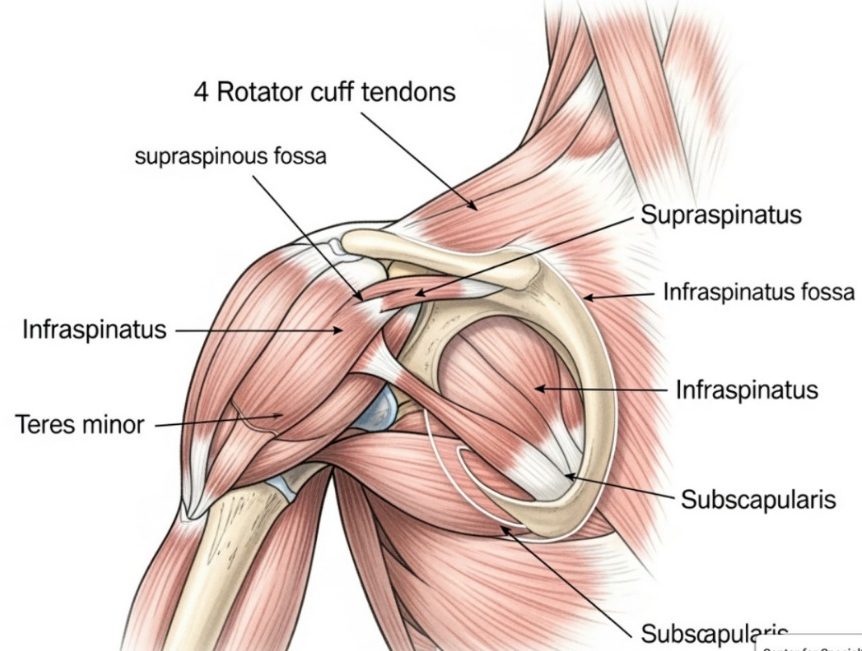
The shoulder is a ball-and-socket joint made up of three bones:
- Humerus (upper arm bone)
- Scapula (shoulder blade)
- Clavicle (collarbone)
The head of the humerus fits into a socket in the scapula called the glenoid. The rotator cuff muscles and tendons help keep the joint stable.
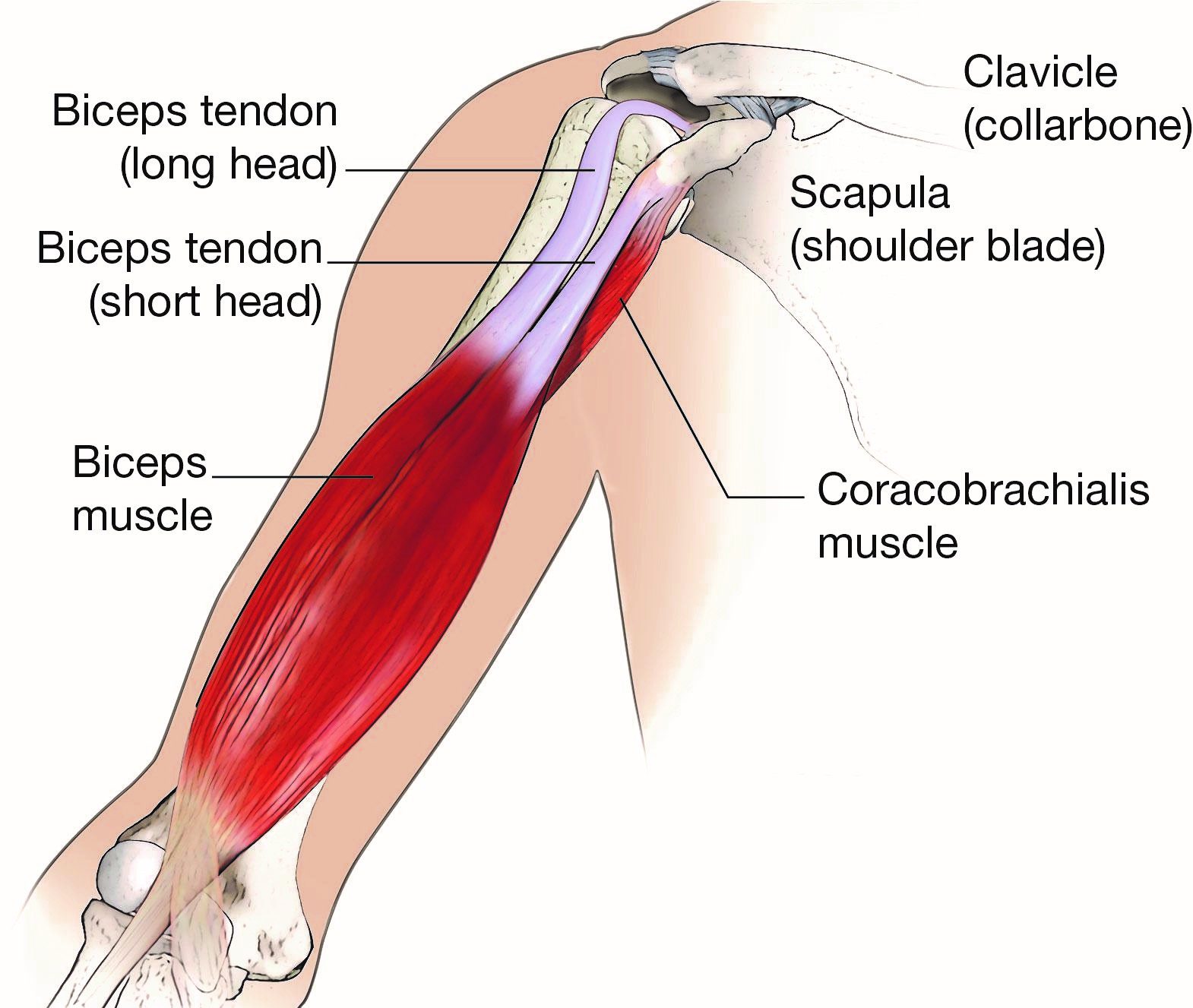
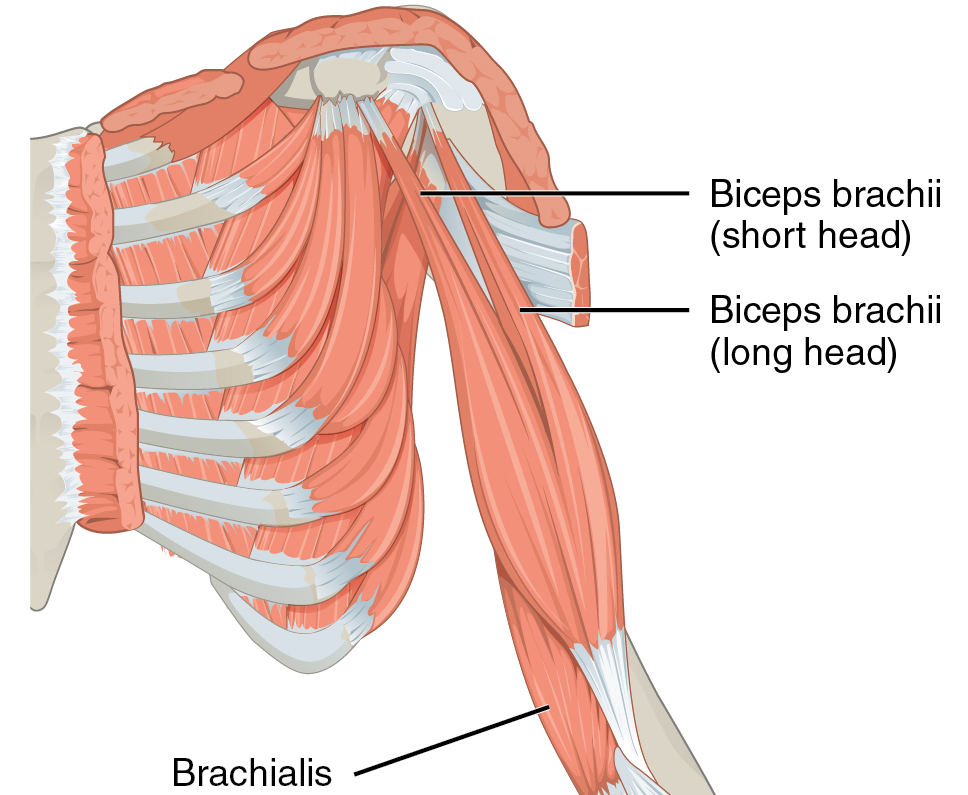
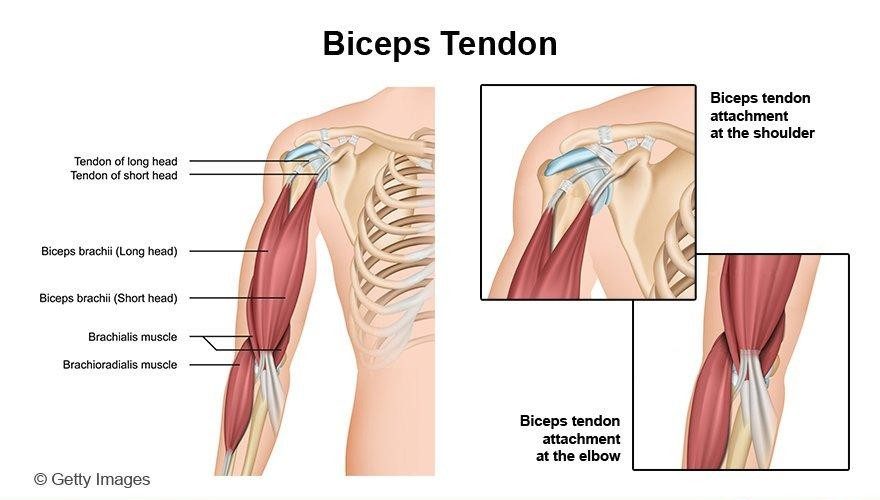
The biceps muscle has two tendons at the shoulder:
- Long head: attaches to the top of the glenoid
- Short head: attaches to the coracoid process
Because the short head usually remains intact, most patients maintain reasonable strength even after a long-head tear.
Shoulder Anatomy
Partial Tear
- Tendon is damaged but not completely detached
- Some fibers remain intact
Complete Tear
- Tendon fully detaches from the bone
- May cause a visible bulge in the arm (“Popeye deformity”)
In many patients, the tendon gradually weakens and frays before tearing completely.
Biceps tendon tears often occur along with:
- Rotator cuff tears
- Shoulder impingement
- Bursitis
- Shoulder arthritis
Dr. Senthilvelan carefully evaluates the entire shoulder to identify and treat all associated problems.
Causes
Injury
- Fall on an outstretched arm
- Lifting a heavy object
- Sudden strain
Overuse
- Age-related tendon degeneration
- Repetitive overhead activity
- Chronic shoulder conditions
Risk Factors
- Increasing age
- Heavy overhead lifting
- Repetitive overhead sports
- Smoking
- Corticosteroid use
Symptoms
Common symptoms include:
- Sudden, sharp pain in the upper arm
- Audible pop or snapping sensation
- Biceps muscle cramping
- Bruising in the upper arm
- Shoulder or elbow pain
- Arm weakness
- Difficulty rotating the forearm
- Visible bulge in the arm (“Popeye deformity”)
Evaluation by Dr. Senthilvelan
Clinical Examination
Dr. Senthilvelan performs a detailed assessment including:
- Arm contour and muscle shape
- Range of motion
- Biceps strength testing
- Pain during muscle contraction
- Evaluation for associated shoulder injuries
Complete tears are often diagnosed clinically, while partial tears may require imaging.
Imaging Investigations
X-rays
- Used to detect associated bone or joint problems
Ultrasound
- Evaluates tendon condition
- Useful for dynamic assessment
MRI
- Best test for soft tissue injuries
- Confirms partial or complete tears
- Detects associated rotator cuff injuries
Non-Surgical Treatment
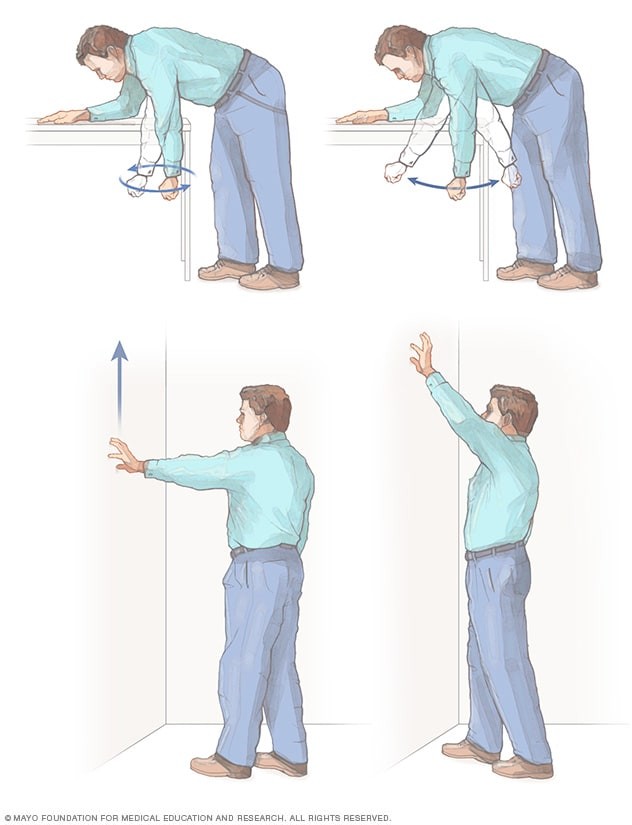
Most shoulder-level biceps tendon tears can be treated without surgery.
Treatment Options
- Ice application
- Anti-inflammatory medications
- Rest and activity modification
- Short-term sling support
- Physiotherapy to restore strength and motion
Many patients return to normal activities without significant limitations.
Surgical Treatment
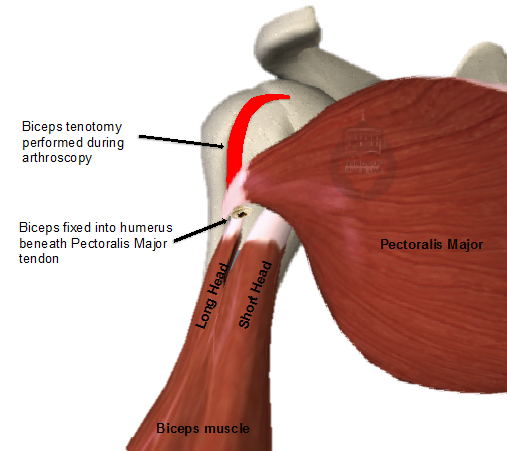
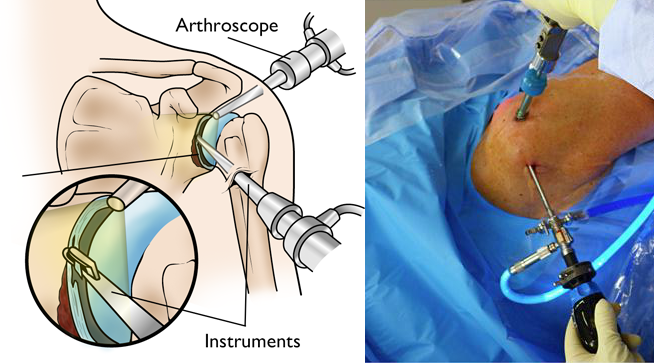
Surgery is considered only when symptoms significantly affect function or when associated shoulder injuries are present.
Dr. Senthilvelan personally performs all surgical procedures and supervises the entire treatment and rehabilitation process.
Biceps Tenodesis
- Torn tendon reattached to the upper arm bone
- Restores strength and improves arm contour
- Usually performed arthroscopically or through a small incision
Possible Surgical Complications
Although uncommon, risks include:
- Infection
- Shoulder stiffness
- Nerve injury
- Muscle cramping
- Tendon rupture
- Pain at reattachment site
Rehabilitation After Surgery
- Sling for a short period
- Early flexibility exercises
- Gradual strengthening program
- Structured physiotherapy
Dr. Senthilvelan closely monitors recovery and adjusts the rehabilitation plan at each follow-up visit.
Surgical Outcome
Successful surgery can:
- Improve arm strength
- Restore normal function
- Correct the muscle deformity
- Reduce pain and cramping
Most patients return to normal daily activities after recovery.
Patient FAQs – Biceps Tendon Tear
What happens when the biceps tendon tears?
The long head of the biceps tendon detaches from the shoulder. Since the second attachment usually remains intact, most patients retain good arm function.
Will I lose strength permanently?
Most patients experience only mild weakness and can perform daily activities without difficulty.
What is a “Popeye deformity”?
It is a bulge in the upper arm caused by the retracted biceps muscle after a complete tendon tear.
Do all biceps tendon tears require surgery?
No. Most shoulder-level tears are treated successfully without surgery.
When do you recommend surgery?
I recommend surgery only when pain, cramping, or weakness significantly affects daily life or work.
What surgery is usually performed?
The tendon is typically reattached to the upper arm bone in a procedure called biceps tenodesis.
Will you perform the surgery yourself?
Yes. I personally perform the procedure and supervise the entire treatment process.
How long is recovery after surgery?
Most patients return to routine activities within 6–12 weeks, with strengthening continuing afterward.
Will the arm look normal after surgery?
Yes. Surgery usually restores the normal contour of the arm.
How closely will you monitor me after surgery?
I schedule regular follow-ups to monitor healing and guide your rehabilitation for the best possible outcome.